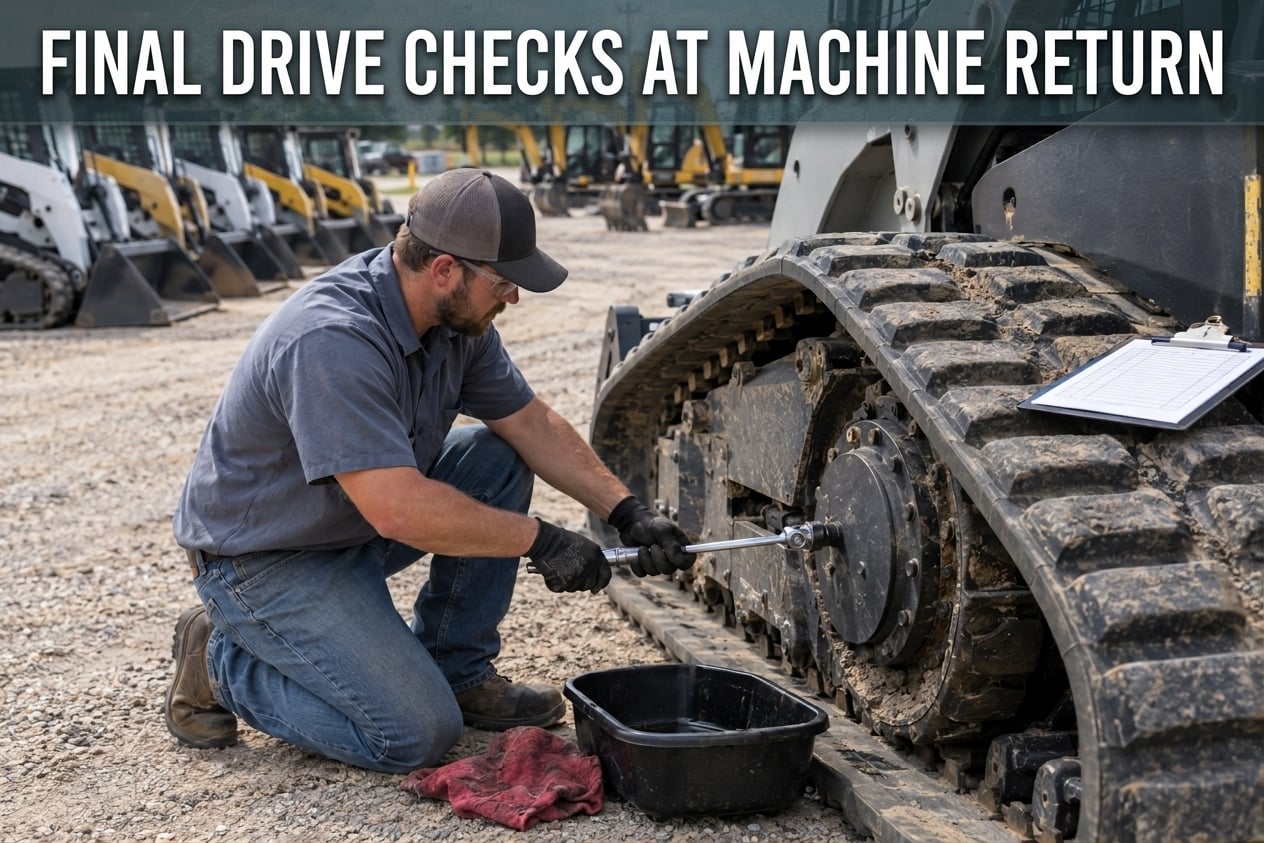
Every rental return is a chance to catch a final drive problem while it's still small. Once the machine goes back out, you're relying on the next renter, who doesn't know the machine's history, to notice a slow leak or a new noise. Usually they don't, until the machine stops on their job.
A short final drive check at check-in costs a few minutes of a technician's time. Skipping it can mean an emergency service call, a machine off rent, and an unhappy customer. Here's a practical check-in routine for compact track loaders, skid steers, and mini excavators from Bobcat, Kubota, John Deere, and other brands.
Why Final Drives Deserve Their Own Line on the Check-In Sheet
The final drive takes everything a renter does. That includes overloading, counter-rotating on concrete, running with packed tracks, and operating in mud and standing water. Renters don't own the machine, so they rarely report early warning signs.
In our experience, most premature final drive failures trace back to a few maintenance items: a clogged case drain filter, low gear oil, or gear oil that wasn't changed often enough. We cover this in Maintaining a Bobcat Final Drive. All three can be caught on a regular schedule, and a rental yard's check-in process is the natural place for that schedule.
The 10-Minute Final Drive Check-In
1. Clean before you look
Pressure-wash or scrape the final drive area first. Packed mud hides leaks, and it gets into the gear housing when you open the fill plugs -- and an excessive build up can even force the face seals apart. Also clean around the plugs before you open anything.