Shop Talk Blog

The Official Blog for Texas Final Drive

Dr McCaslin

Recent Posts

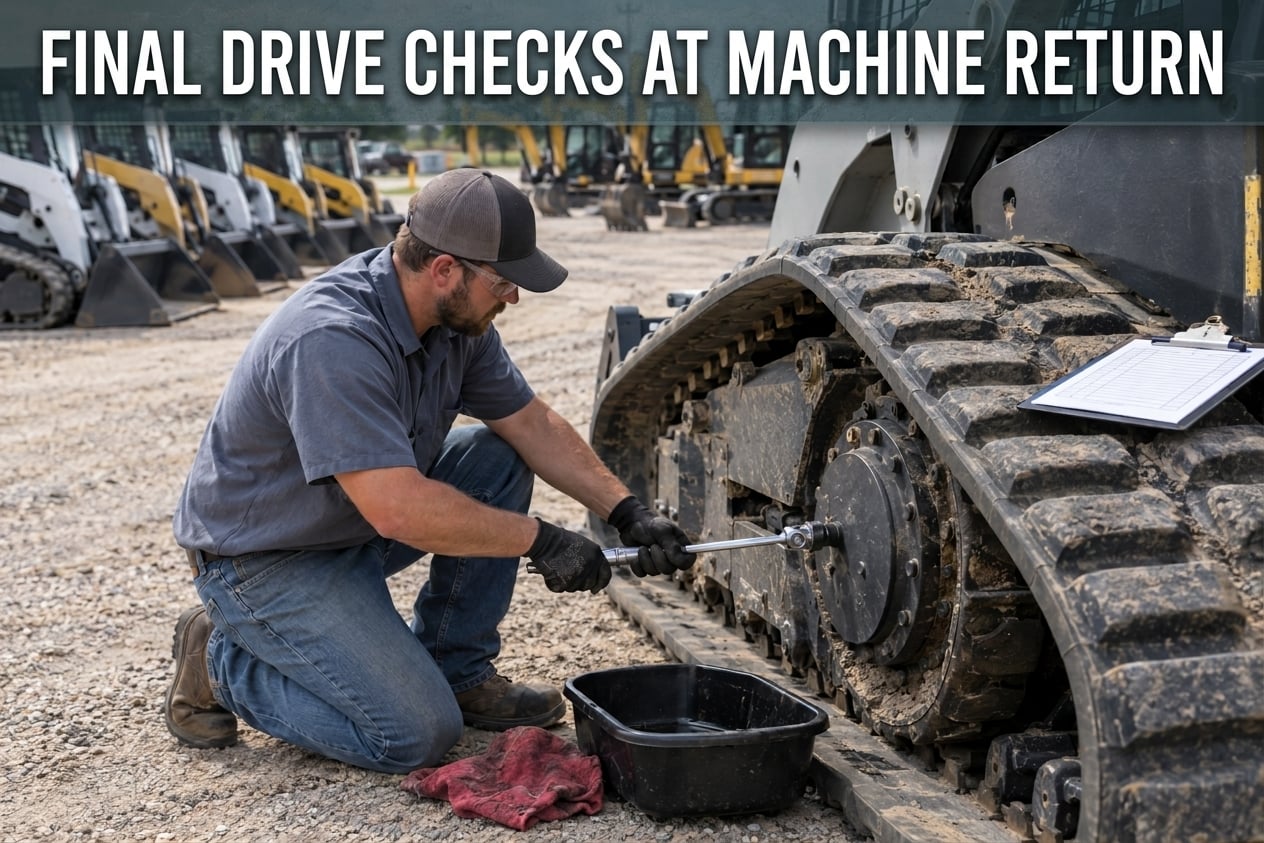
Final Drive Checks at Machine Return: A Rental Fleet Inspection Guide

Every rental return is a chance to catch a final drive problem while it's still small. Once the machine goes back out, you're relying on the next renter, who doesn't know the machine's history, to notice a slow leak or a new noise. Usually they don't, until the machine stops on their job.

A short final drive check at check-in costs a few minutes of a technician's time. Skipping it can mean an emergency service call, a machine off rent, and an unhappy customer. Here's a practical check-in routine for compact track loaders, skid steers, and mini excavators from Bobcat, Kubota, John Deere, and other brands.

Why Final Drives Deserve Their Own Line on the Check-In Sheet

The final drive takes everything a renter does. That includes overloading, counter-rotating on concrete, running with packed tracks, and operating in mud and standing water. Renters don't own the machine, so they rarely report early warning signs.

In our experience, most premature final drive failures trace back to a few maintenance items: a clogged case drain filter, low gear oil, or gear oil that wasn't changed often enough. We cover this in Maintaining a Bobcat Final Drive. All three can be caught on a regular schedule, and a rental yard's check-in process is the natural place for that schedule.

The 10-Minute Final Drive Check-In

1. Clean before you look

Pressure-wash or scrape the final drive area first. Packed mud hides leaks, and it gets into the gear housing when you open the fill plugs -- and an excessive build up can even force the face seals apart. Also clean around the plugs before you open anything.
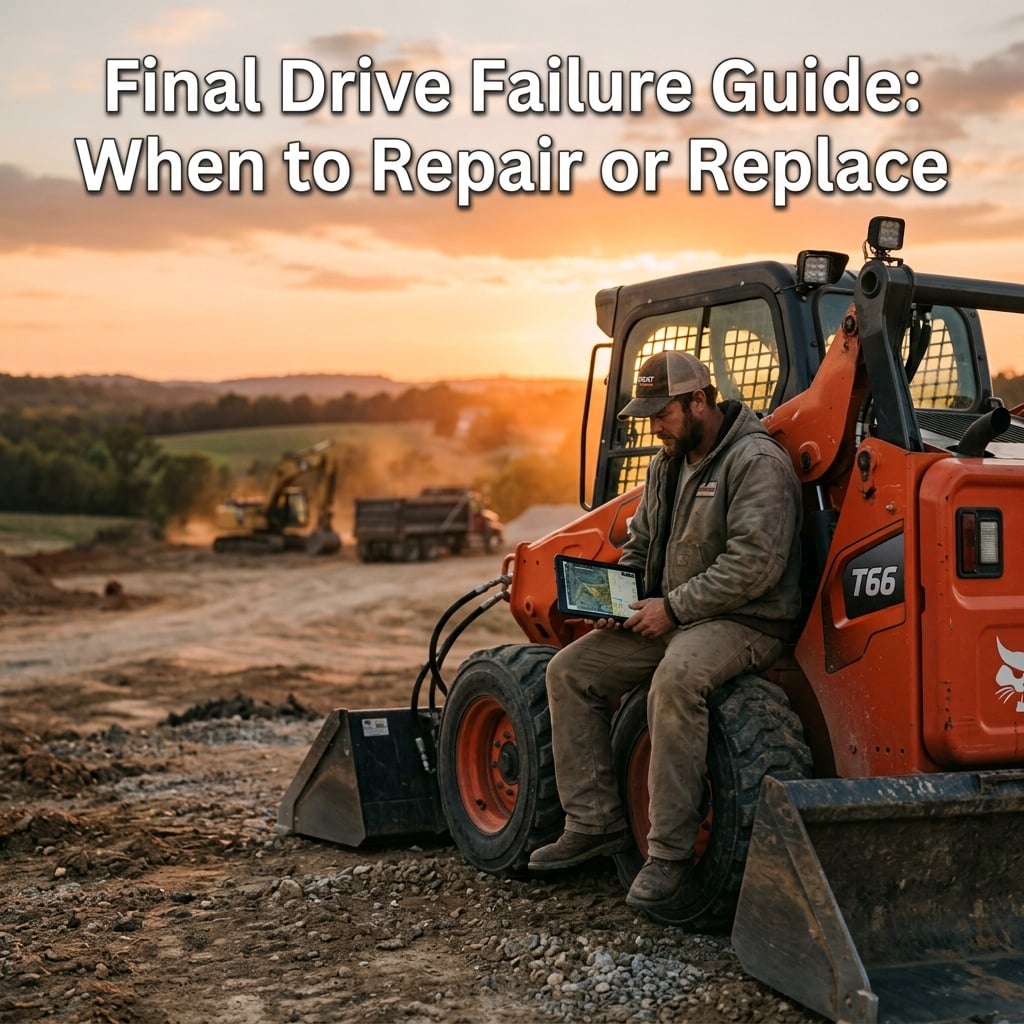
Final Drive Failure Guide: When to Repair or Replace

Experts recommend you repair when your damage is localized to components like seals, bearings, or minor internal components, if the housing/case is undamaged and downtime permits a teardown.

Replacement makes sense when a catastrophic planetary gear failure occurs, the outer case or main shaft is destroyed, metal contamination has flooded the hydraulic system, or minimizing machine downtime is the top priority.

In this Shop Talk Blog post, let’s talk about why this approach is recommended.

Key Takeaways: Final Drive Failure Guide

Quick diagnostic decision framework for deciding whether to repair or replace your final drive motor based on Texas Final Drive technical guidelines.

  1. 1. Perform a 4-Step Diagnostic Check Before Deciding

    Before jumping to replacement, evaluate the drive using four critical factors: extent of physical damage, estimated downtime, total repair costs, and remaining machine lifecycle.

  2. 2. Minor Issues Are Candidates for Repair

    If damage is isolated—such as worn face seals, minor bearing wear, or simple hydraulic leaks—repairing or rebuilding the motor is usually the most cost-effective option.

  3. 3. Catastrophic Internal Damage Warrants Full Replacement

    When severe damage occurs—like shattered planetary gear sets, cracked main housings, or total piston metal-on-metal lockups—replacement is safer, faster, and cheaper than replacing individual internal components.

  4. 4. Factor in the Cost of Downtime, Not Just Parts

    A new or remanufactured final drive motor ships immediately, eliminating expensive jobsite downtime compared to waiting days or weeks for shop tear-downs and specialized parts.

When a final drive motor fails, the work it was doing literally comes to a stop. That downtime is expensive in more ways than one: there’s the lost productivity, repair costs, the potential for missed deadlines, and even the possibility of losing customers. That means one approach to determining if you should repair or replace a final drive is how much downtime you can absorb.

If you have plenty of time and the damage isn’t severe, you can repair your final drive motor. However, if time isn’t on your side or the damage is extensive, then you should probably be looking at a replacement final drive motor. And remember, there are some types of damage that just can’t be repaired. We usually refer to that kind of issue as a catastrophic failure.

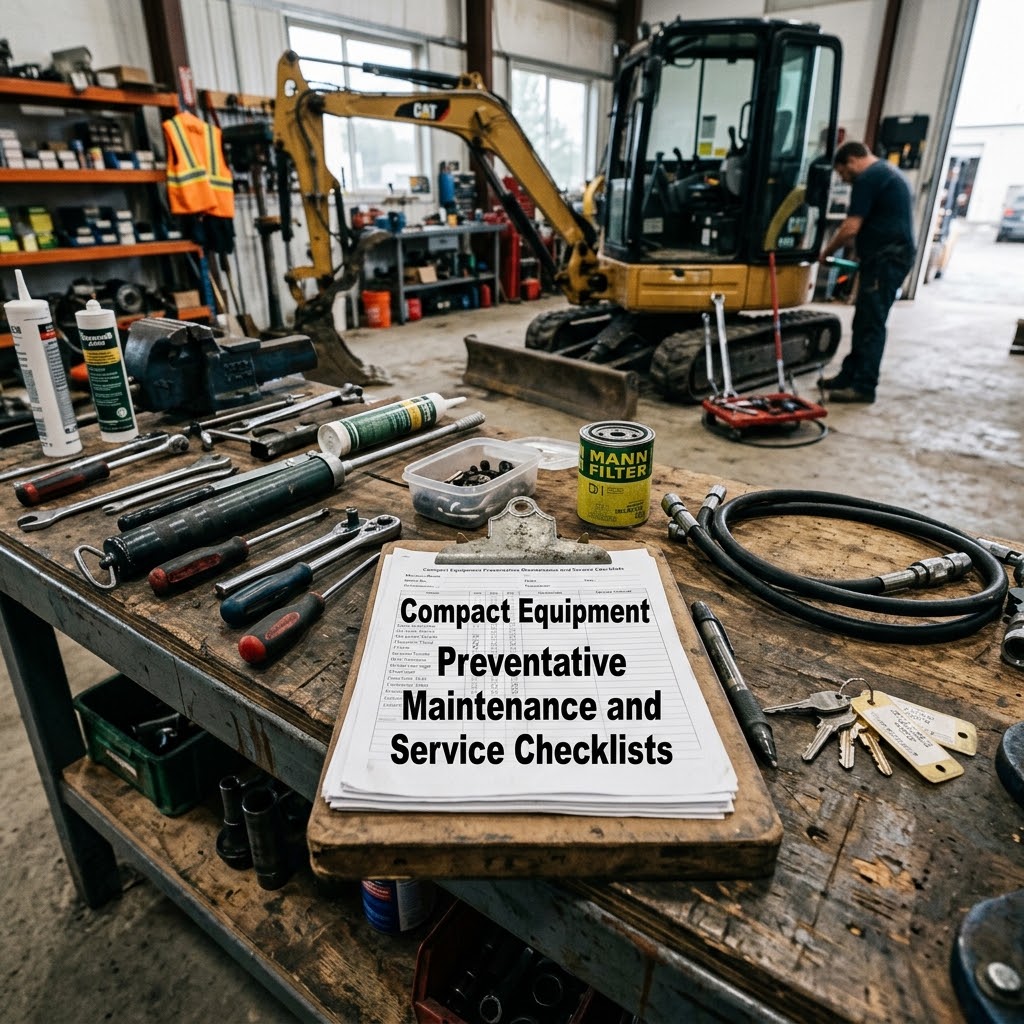
Compact Equipment Preventative Maintenance and Service Checklists

Preventative maintenance can transform an unexpected, costly, reactive repair cycle into a predictable, proactive management strategy. Is it worth the trouble, though? We think so. That’s why we prepared suggested maintenance schedules based on industry best practices.

Why Preventative Maintenance is Crucial to Your Equipment

Minimizing Downtime: An unexpected breakdown of a single primary asset (like an excavator) can stall an entire job site, leading to lost productivity costs of $450 to $760 per hour (for example), plus emergency technician travel and repair fees. It can also throw a job behind schedule, causing problems for your client and for your reputation.

Preventing "Domino-Effect" Catastrophic Failures: It’s a fact: seemingly minor, inexpensive maintenance failures can lead to very expensive component damage. For example, failing to replace a $20 case drain filter leads to line clogging, which spikes internal hydraulic pressure. That pressure spike will eventually blow out the main shaft seal, dilute your gear oil, destroy internal bearings/pistons, and can crack the cover plate. Failing to replace a $20 part can destroy a multi-thousand-dollar final drive motor.

Lowering TCO: Preventative maintenance reduces moving friction, which directly lowers fuel consumption, limits parts wear, and improves overall tractive effort. It also reduces repair costs and increases productivity.

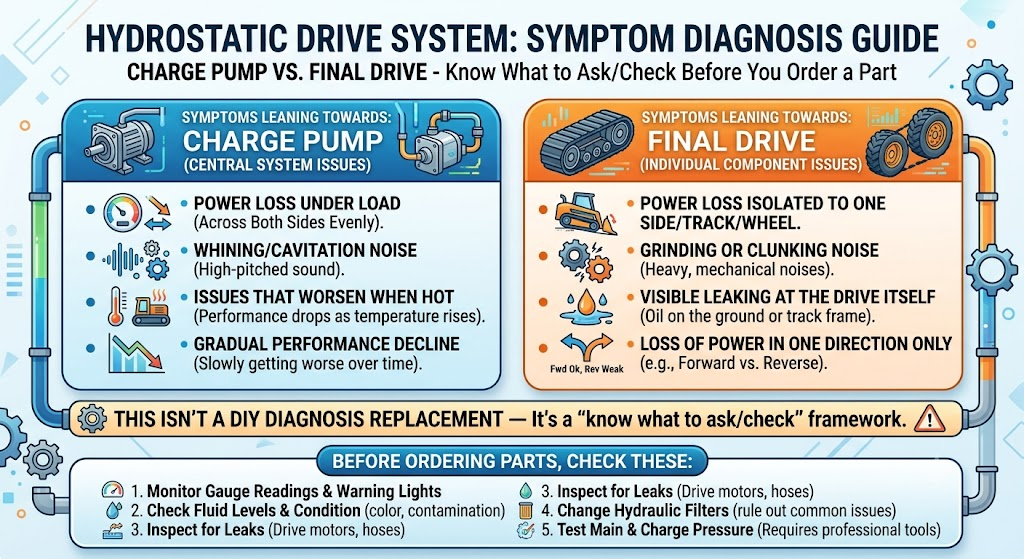
Charge Pump vs. Final Drive: How to Tell the Difference Before You Spend a Dime

You’ve noticed that your CTL seems weak or sluggish, or maybe it loses power under load. Your first instinct is probably to assume your final drive motor is shot … but is it? That assumption proves wrong more often than you might think. In fact, a quick phone call with a tech can save you a $3,500+ mistake.

This blog post goes in depth on charge pump issues, what the symptoms are, and how to tell the difference from a failing final drive.

Why the Confusion Happens

We’ve talked about this before: both a failing charge pump and a failing final drive motor can cause similar symptoms. A loss of power and sluggishness are both symptoms that final drives and charge pumps can share. Understandably, people usually default to the final drive motor because it's the more commonly known/talked-about component. However, the underlying cause and fix are very different. And that’s why it’s so important to get a proper diagnosis before you start ordering parts.

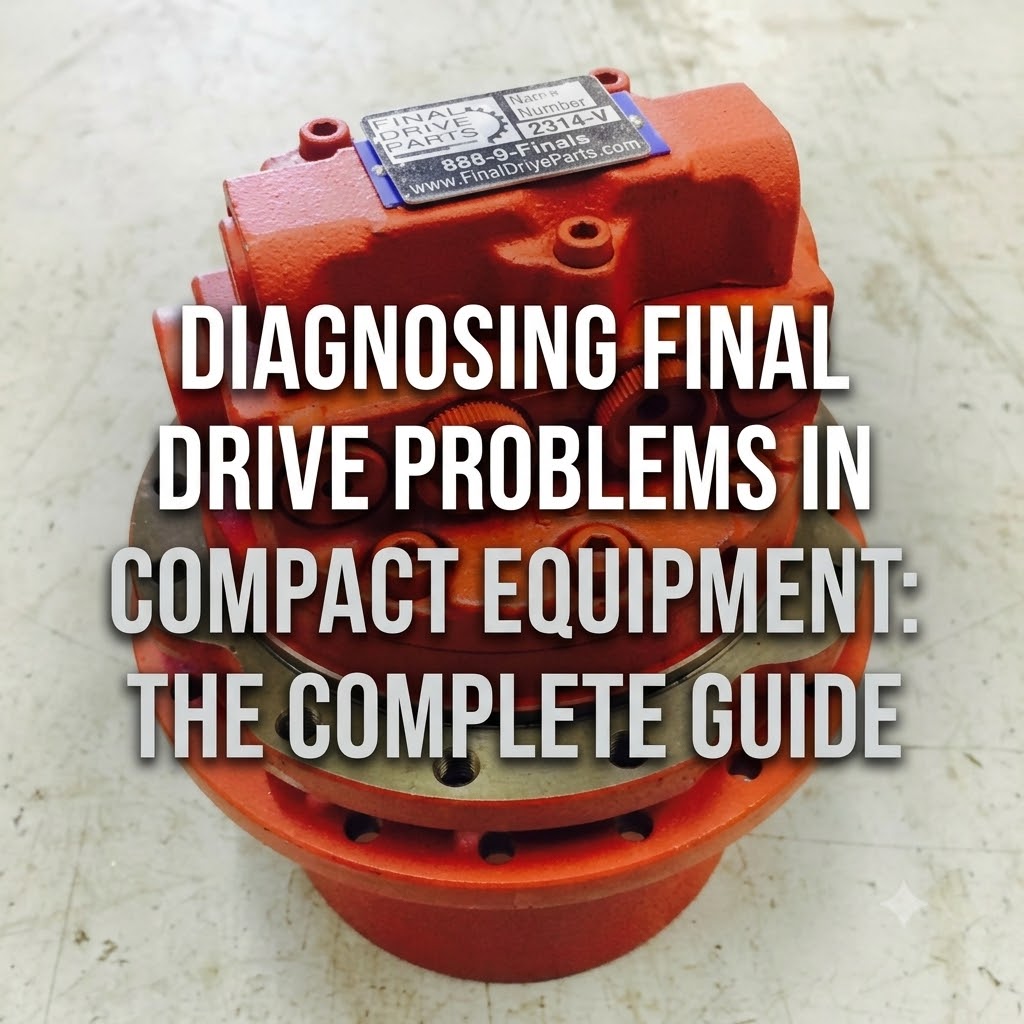
Diagnosing Final Drive Problems in Compact Equipment: The Complete Guide

When a final drive starts acting up, the instinct is to jump straight to "I need a new one." Sometimes that's true. Often it isn't. A weak charge pump, a clogged case drain filter, tracks set too tight, or a machine stuck in high-speed mode can all mimic final drive failure perfectly. And if you replace the drive without finding the real cause, you'll be back in the same spot in a few hundred hours, except now you're out the cost of a motor too.

This guide pulls together everything we've learned diagnosing final drives at Texas Final Drive. From the questions to ask before you even open a toolbox, to symptom-by-symptom troubleshooting, to the tests our techs actually run in the shop, you can find information here. Whether you're running a single skid steer or managing a fleet, the goal is the same: figure out what's really wrong before you spend a dollar fixing it.

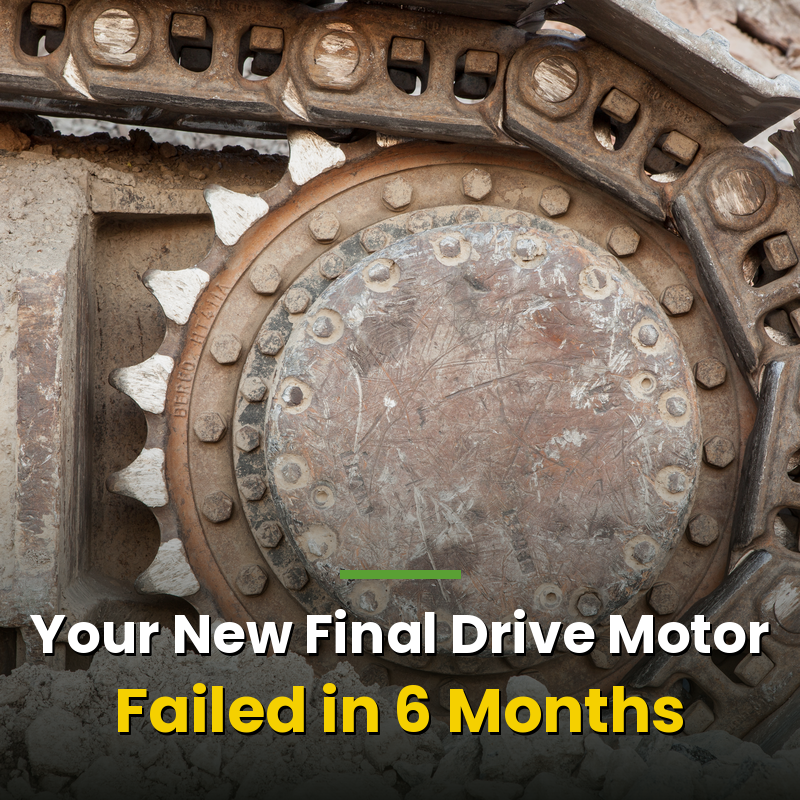
Your New Final Drive Motor Failed in 6 Months - Here's Why It Probably Wasn't the Drive

Somebody's mad, and they have a right to be: just six months, maybe 400 hours, and their new final drive motor is acting up again. Did they buy junk?

Here at Texas Final Drive, we regularly open up final drive motors and the story of the failure is almost always written inside the motor. It’s not usually a manufacturing defect or a bad reman job. It’s often debris from the first failure that’s still living in the machine and ready to chew through a perfectly good replacement.

There’s a good chance that the drive isn’t the root cause. The system may have failed and got a fresh drive to devour.

What a Failed Final Drive Motor Leaves Behind

When a final drive motor fails, it never fails politely. We regularly see bearing races spall, pistons scuff, and the rotary group grind itself down. And all that metal goes somewhere. Fine particles may ride the case drain line straight back into the tank. Bigger particles hang out in the hoses, the cooler, the valve block, and the low spots in the hydraulic reservoir.


Here are a few other Shop Talk Blog posts you might find interesting:

Bobcat Final Drives:  Leaking Seals and Crossrobbing

by Dr McCaslin | Jul 07, 2026 |

Final Drive Motor Seals, Leaks, Case Drain, bobcat

|
2 Comments

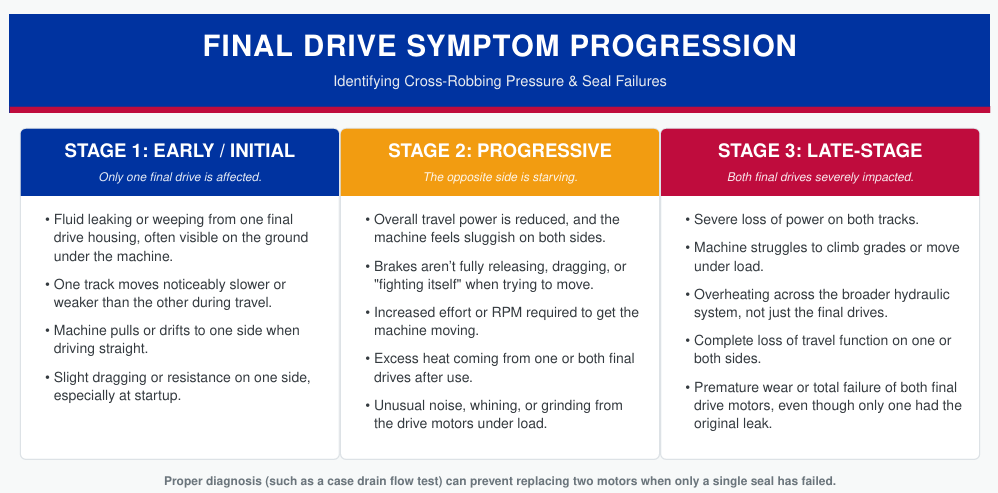
On newer Bobcat models that share a common brake circuit, we've been seeing a failure pattern that starts small but takes out both final drives. And it might be affecting you! Read on to learn what it does and how to diagnose it on your equipment.

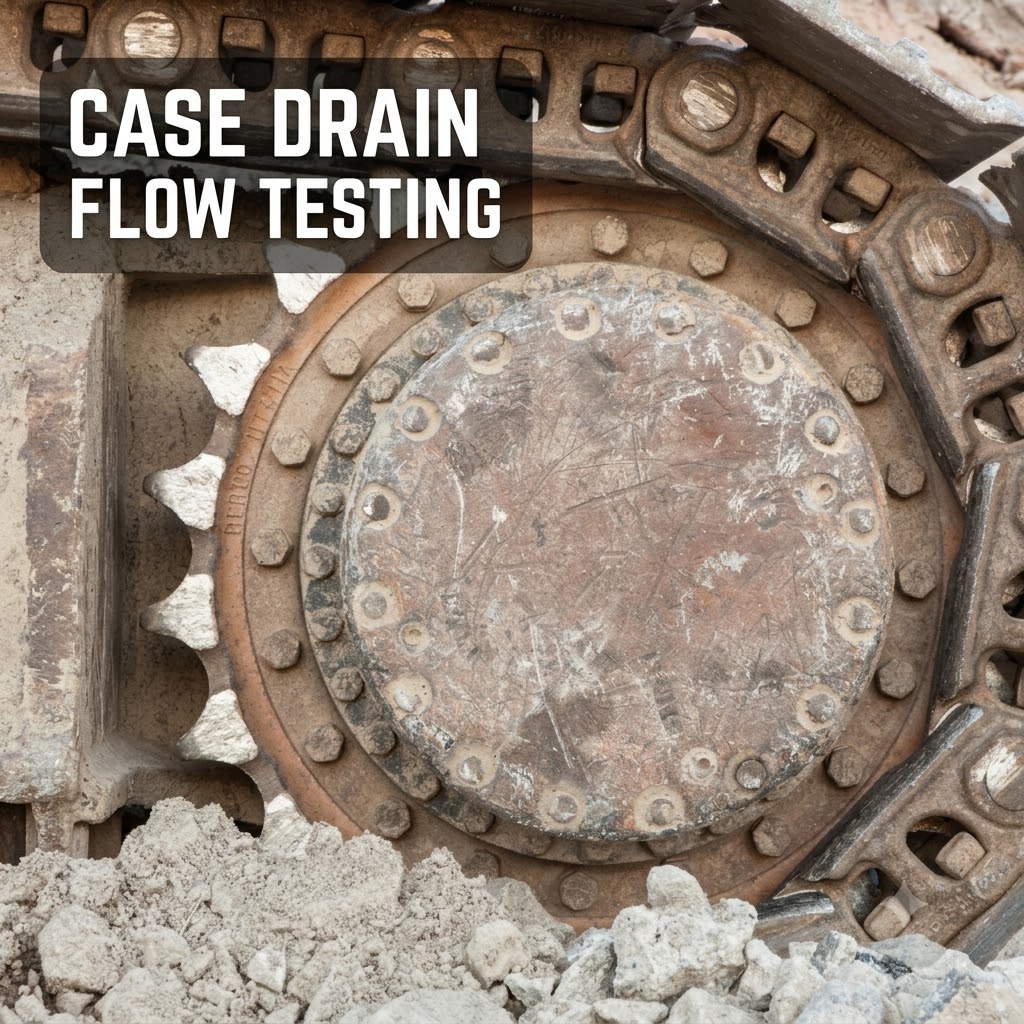
Case Drain Flow Testing: The One Test Most Operators Skip

by Dr McCaslin | Jul 01, 2026 |

Case Drain, Case Drain Flow

|
0 Comments

Most owners and operators don’t realize how important case drain flow is when evaluating and diagnosing a final drive motor. This test can tell you a great deal about what’s going on inside your final drive without having to open it up.

In this blog post, we take a look at case drain flow testing, including how to perform the test and how to interpret the results.

Internal Leakage

Internal leakage is designed to support lubrication and cooling of dynamic components (e.g., bearings, pistons, etc.). Now, this leakage never leaves the system. It will always be returned to the hydraulic reservoir, often via a low-pressure drain line. Internal leakage does not contribute to the work being done by the final drive motor, though.

There is a baseline case for the hydraulic motor drain flow on your machine. However, as wear increases internal clearances and internal seals wear out, the case drain flow increases. This directly reduces the final drive's volumetric efficiency.

Why Your Final Drive Motor Runs Hot and What That Heat Is Trying to Tell You

Overheating is one of the earliest warning signs that something inside your final drive is going wrong. Before you hear grinding or experience a total failure, a steady rise in temperature often signals problems that you can catch early if you know what to look for.

In this Shop Talk Blog post, we’ll talk about what is considered too hot, then discuss the five key reasons why final drives overheat. We’ll wrap up with a quick review of what kind of damage overheating can cause and simple checks to address it.


Here are a few other Shop Talk Blog posts you might be interested in:

The Real Cost of Running on Bad Hydraulic Fluid

You probably maintain your tracks, filters, and attachments, but did you know that hydraulic fluid quietly destroys pumps and final drives when it’s neglected? Bad hydraulic fluid won’t fail overnight. Its effects are slow, causing excessive heat, accelerated wear, and power loss, until your equipment comes to a complete stop.

In this Shop Talk Blog post, we're looking at what it costs you to keep running your compact equipment on bad hydraulic fluid ... and the price is more than you budgeted for!


Here are a few other Shop Talk Blog posts you might find interesting:

"Shop Talk Blog" Email Updates

Connect blog-rss-feed 

Posts by Topic

see all