
Somebody's mad, and they have a right to be: just six months, maybe 400 hours, and their new final drive motor is acting up again. Did they buy junk?
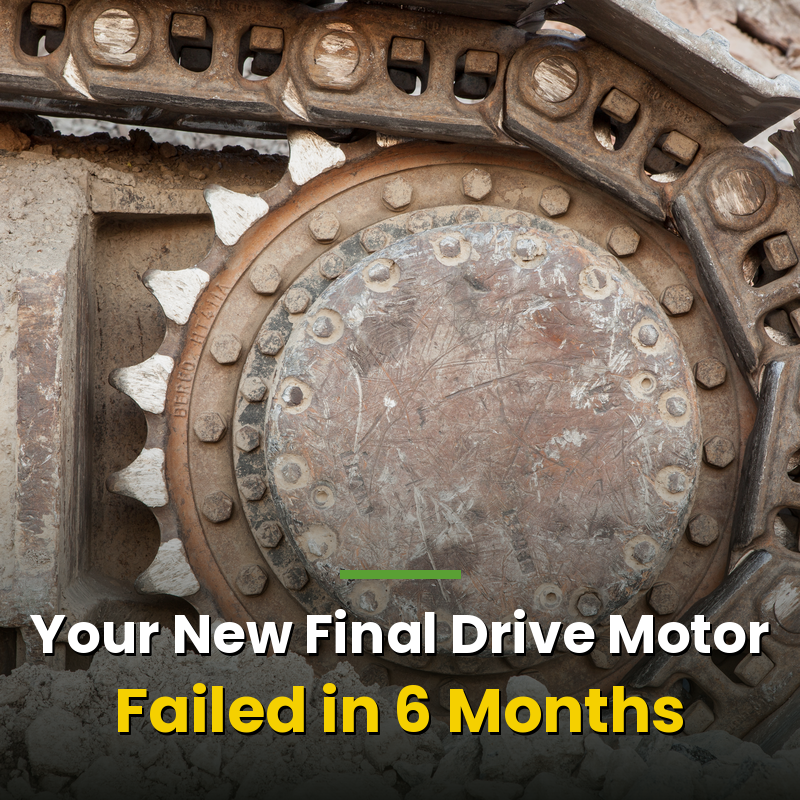
Here at Texas Final Drive, we regularly open up final drive motors and the story of the failure is almost always written inside the motor. It’s not usually a manufacturing defect or a bad reman job. It’s often debris from the first failure that’s still living in the machine and ready to chew through a perfectly good replacement.
There’s a good chance that the drive isn’t the root cause. The system may have failed and got a fresh drive to devour.
What a Failed Final Drive Motor Leaves Behind
When a final drive motor fails, it never fails politely. We regularly see bearing races spall, pistons scuff, and the rotary group grind itself down. And all that metal goes somewhere. Fine particles may ride the case drain line straight back into the tank. Bigger particles hang out in the hoses, the cooler, the valve block, and the low spots in the hydraulic reservoir.
Here are a few other Shop Talk Blog posts you might find interesting:
These metal particles are contamination in your hydraulic fluid. And the particles that do the most damage are the ones you can't see: the 5–20 micron range that happens to fit perfectly in a piston/bore clearance and lives there, grinding away the whole time your final drive motor is working. Once particle contamination starts, it keeps generating new contamination until a catastrophic failure occurs or the contamination is removed.
And here’s the tricky part: your hydraulic system is going to remember the last failure until somebody cleans the contaminants out.
Flushing the System: What it Means and What it Doesn’t
First, let’s establish this key point: draining the tank, filling it back up, and calling it done is not flushing the system. Remember: both drives share the same oil, so if one grenaded, the other has been drinking the debris.
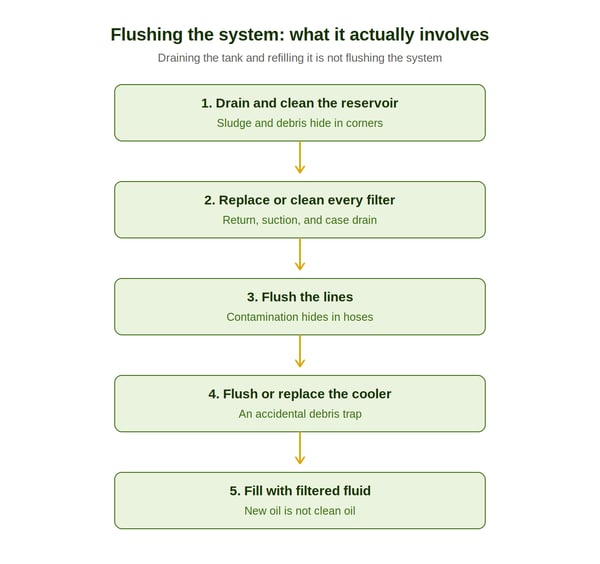
Here’s a basic outline of what flushing the system involves …
- Draining and physically cleaning the reservoir. This means getting in the hydraulic reservoir to get the sludge and debris out of the corners.
- Replacing or cleaning every filter, including the return filter, suction strainer, and the case drain filter (if your machine has one).
- Flushing the lines. As we just talked about, contamination hides in hoses and the cooler. Remember that even brand new fluid pumped through dirty lines becomes dirty within minutes.
- Flushing or replacing the cooler. It’s a debris trap even though it wasn’t designed that way.
- Filling with clean fluid. Remember that new oil out of a drum can arrive dirtier than your ISO target and cause serious problems with newer machines that have tighter tolerances. Running your hydraulic fluid through a filter before adding it to your machine is always a good move.
It Isn't Always Contamination
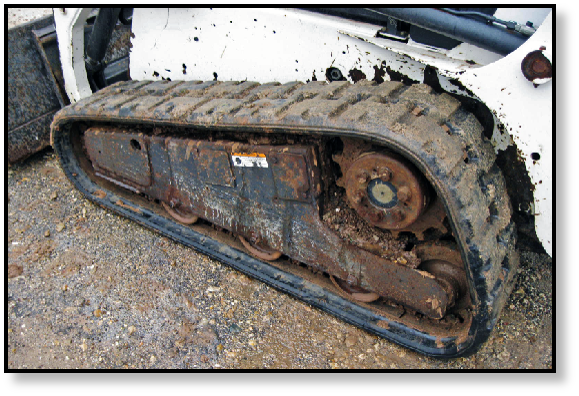
The problem isn’t always found in the final drive motor, however. Here are some other potential issues:
- Charge pump. A weak hydraulic charge pump will starve the new motor on a skid steer or CTL exactly like it starved the old one. You’ll see the same failure and the same timeline, even with a brand new final drive motor.
- Main pump on its way out. In this case, you replaced the victim, not the main pump that was really causing the final drive issues.
- Track tension. Over-tight tracks will side-load the bearings and hammer the seals.
- Case drain restriction. A plugged case drain filter is a disaster that spikes internal pressure and blows the shaft seal from the inside (and can even crack the hub).
- Installation issues. There are a lot of things that can go wrong during installation: wrong gear oil, wrong fill level, dry start, drive shaft not seated, and bolts not torqued to sequence.
- Operating pattern. Constant spin-turns on concrete or asphalt side-load the drive; it's not what anyone wants to hear, but it's a real cause we see
Sometimes it's not the final drive at all, and we'd rather tell you that than sell you one you don’t need.
Reman Final Drives
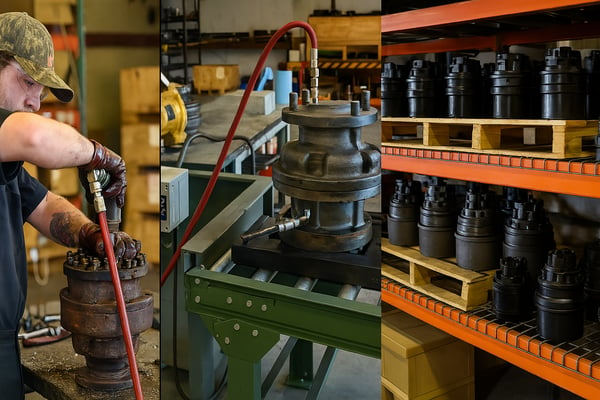
Texas Final Drive’s reman final drives meet or exceed OEM spec, and they’re thoroughly tested and documented before they ship. Now here’s the problem: a new OEM drive installed into a contaminated system is going to fail prematurely, too.
Now, when a reman drive dies at six months, "reman must be inferior" is the easy conclusion, but it might not be the problem.
We know the quality of what we sell; that’s why we offer a 1-year, unlimited-hour warranty on remanufactured drives and a 2-year, unlimited-hour warranty on new final drive motors, with parts and labor covered on both. We worked hard to make this warranty hassle-free. And honestly, we’d rather the drive never come back at all. And that’s why we took the time to write this, and even have another blog post reminding everyone what can void our warranty.
The Checklist for Final Drive Failure
Before you bolt in a replacement drive, new or reman, this is what we advise you to do:
- Confirm what actually killed the old final drive motor
- Drain and clean the reservoir
- Replace or clean every filter, including return, suction, and case drain
- Flush lines and cooler
- Check charge pump pressure
- Check case drain flow
- Inspect the other drive on the machine
- Verify that the track tension is to spec
- Fill with clean hydraulic fluid
- Check the gear oil and correct fill level
- Torque the final drive motor to sequence
- Check the gear oil again at 50 hours
Conclusion
The replacement drive is the cheap part of this job. The hour spent flushing the system is what decides whether you're doing it once or twice. if you need help figuring out what went wrong, contact us here at Texas Final Drive today!