
A compact track loader comes back from rental pulling hard to the left. The final drive looks like the obvious cause, and swapping it seems like the fastest way to get the unit back on rent.
Sometimes that's the right call. But a new or reman final drive won't fix a weak charge pump, a clogged case drain line, a dragging parking brake, or a stuck two-speed valve. If the real cause is somewhere else, you've spent the money, the machine is still down, and the new drive may be damaged by the same problem.
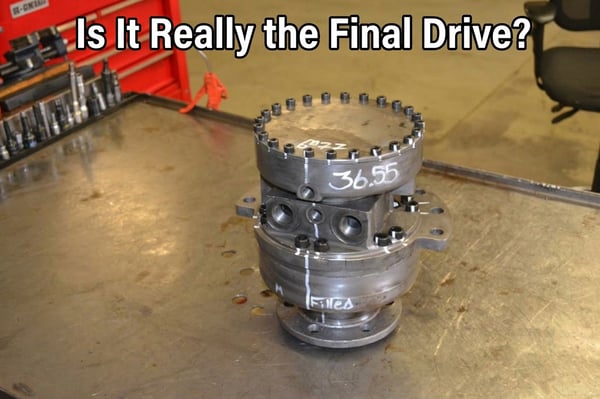
Here's how rental fleet technicians can narrow down the cause before ordering parts. For a deeper look at symptoms, see our final drive diagnosis guide.
⚙️ Key Takeaways
- Diagnose before replacing
- Start by determining whether one side or both sides are affected
- Check case drain restrictions, gear oil condition, brake release, two-speed operation, and case drain flow before condemning the drive.
- Finding and correcting the root cause helps rental fleets avoid unnecessary parts costs, repeat downtime, and damage to replacement drives.
Start with one question: one side or both?
This is an important first step that gets forgotten quite often:
- Both sides weak or slow: Look first at shared parts of the hydraulic system. That includes charge pressure, hydraulic fluid level and condition, filters, engine speed, and drive pump settings. Two final drives rarely fail at the same time.
- One side only: The problem is probably in that side's circuit. That includes the final drive or travel motor, its hoses and fittings, its pump section or control, its brake, or its two-speed valve.
This one observation can stop you from replacing a final drive when the cause is actually a system-wide problem.
Common causes that look like final drive failure
Low charge pressure
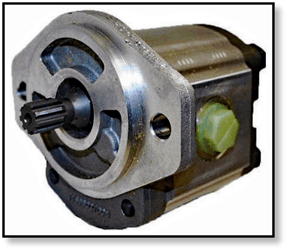
On hydrostatic drive systems, the charge pump keeps the closed loop supplied with fluid and supplies pressure for controls and brake release on many machines. Low charge pressure can cause sluggish travel, loss of power, and erratic behavior. These symptoms overlap with a failing final drive. Check charge pressure against the OEM specification with a gauge before you condemn a final drive motor.
A restricted or clogged case drain
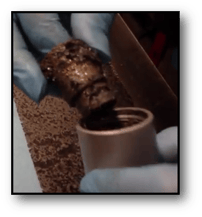
The case drain returns internal leakage from the travel motor to the reservoir. If the case drain filter or line clogs, pressure can build inside the motor case. That can blow out the motor shaft seal and push hydraulic oil into the gear housing. In the worst case, it can blow off the cover plate or crack the hydraulic housing. That said, a drive overfilled with hydraulic oil often traces back to the case drain.
Always replace the case drain filter whenever you change the other hydraulic filters. Never install a new final drive on a machine with a clogged case drain, or the new drive is going to be exposed to the same damage. Never let the case drain filter get clogged unless you want some very expensive damage.
High case drain flow
Too much case drain flow points the other way: the travel motor itself has internal wear. A case drain flow test is one of the most useful checks when deciding whether a motor is worn out, and many operators skip it. Measure the flow under the conditions in the service manual and compare it to the specification. If the flow is too high, then you've likely got some issues with internal wear that needs to be addressed. Let's face it: the rotator components are going to eventually wear out and need repair.
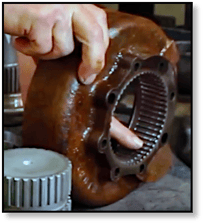 Parking brake not fully releasing
Many compact equipment final drives have a spring-applied, hydraulically released parking brake. If release pressure is low, or the brake is damaged, the drive can drag. The result is slow travel, heat, and noise on that side. See Damaged Final Drives: Brakes for more on brake-related symptoms. Here's what that damage can look like -- you'll notice the deep gouges present.

Two-speed problems
If the machine travels normally in low speed but (1) won't shift into high speed, (2) one side shifts and the other doesn't, or (3) the final drive seems to be lacking power, look at the two-speed solenoid, its wiring, the pilot supply, and the shift valve before blaming the drive. Keep in mind that if the final drive ends up trapped in high speed, it won't have the power you associate with low speed.
Hoses, fittings, and contamination
A collapsed hose, a damaged fitting, or contaminated hydraulic fluid can all cause travel problems. Fluid condition is especially important on rental units with an unknown history and with newer machines that have tighter tolerances. Contamination can cause absolute nightmares in otherwise good final drive motors, whether it's air, water, chemical, or particles.
When it probably is the final drive
These signs point toward the final drive itself:
- Glitter or metal particles in the gear oil.
- Grinding or clunking from the hub that changes with travel speed.
- Gear oil leaking at the hub (floating face seal).
- High case drain flow on that side's motor.
- A side that's weak with confirmed normal charge pressure and normal brake release.
Our post on common Bobcat final drive motor issues covers several of these on Bobcat machines. Other brands behave similarly.
A quick decision path for rental fleet techs
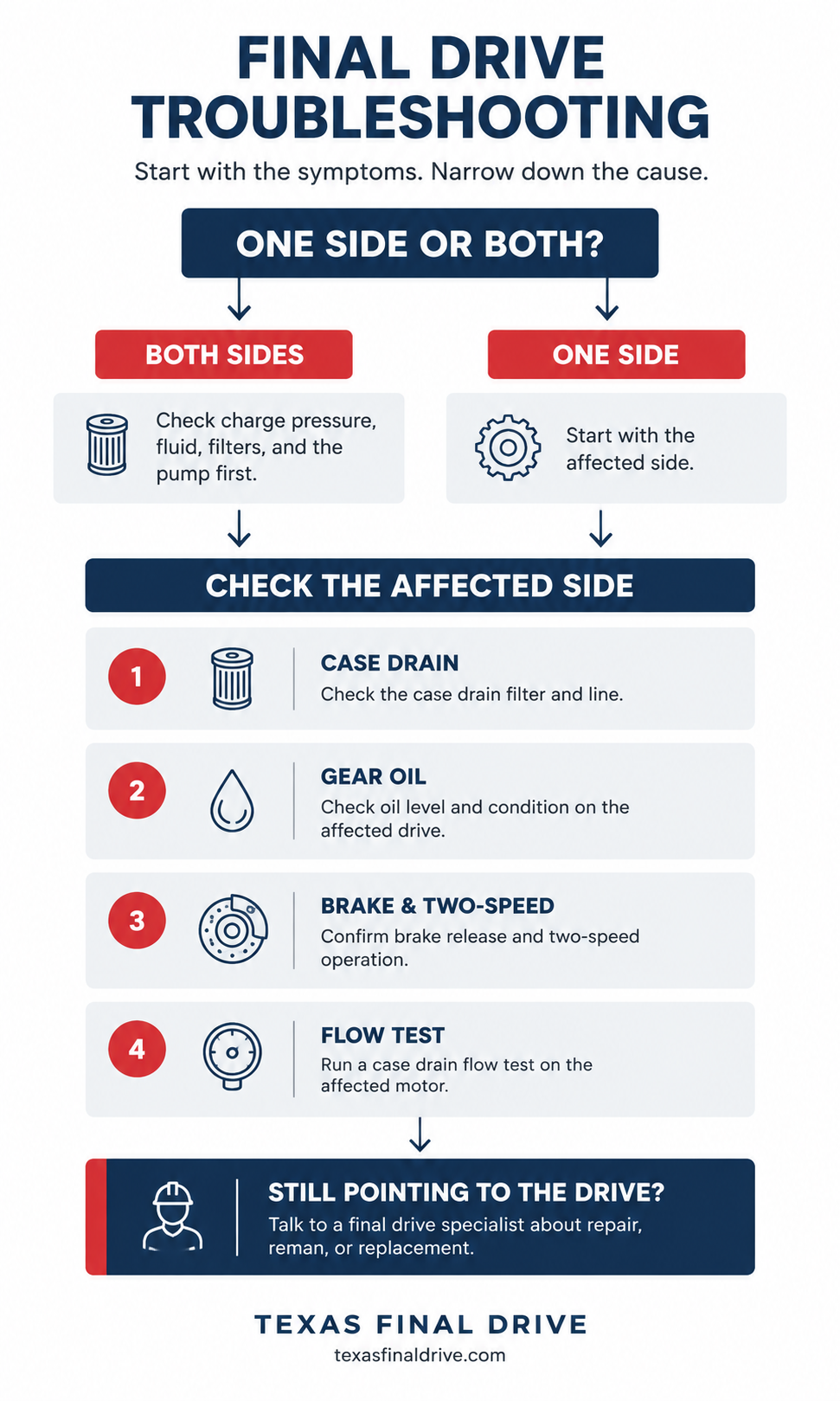
Here's a short list of what to check and in what order to determine if the problem is the final drive motor:
- Is it one side or both? Both sides: check charge pressure, fluid, filters, and the pump first.
- Check the case drain filter and line on the affected side.
- Check gear oil level and condition on the affected drive.
- Confirm brake release and two-speed operation.
- Run a case drain flow test on the affected motor.
- If the drive is still the likely cause, talk to a final drive specialist about repair, reman, or replacement.
Why this matters more for a rental fleet
An owner-operator who misdiagnoses a problem loses money on one machine. A rental fleet that misdiagnoses problems repeatedly loses money across many units. It also wastes parts budget on the wrong components and puts machines back on rent that may come right back.
A few minutes with a pressure gauge and a flow meter is cheap insurance.


Frequently asked questions
How can I tell if it's the charge pump or the final drive?
If both sides are weak, suspect the charge pump or another shared system component first, and check charge pressure against the OEM specification. If only one side is affected, the problem is more likely in that side's circuit, which could be the final drive, its brake, its two-speed valve, or its pump section.
What causes hydraulic oil to get into the final drive gear housing?
Hydraulic oil usually gets past a failed motor shaft seal into the gear housing. A restricted case drain that over-pressurizes the motor case is a common cause.
What is a case drain flow test?
It measures how much internal leakage returns from the motor through the case drain line. Flow above the manufacturer's specification indicates internal motor wear.
Talk to a final drive expert
Not sure what you're looking at? Call us before you replace anything. Our technicians can talk through your symptoms and help you decide whether the problem sounds like the final drive or something else in the system. Texas Final Drive helps rental fleets diagnose Bobcat, Kubota, and John Deere final drive problems every day.
Call a final drive expert: 281-259-5267
You can also contact Texas Final Drive or request a quote.