
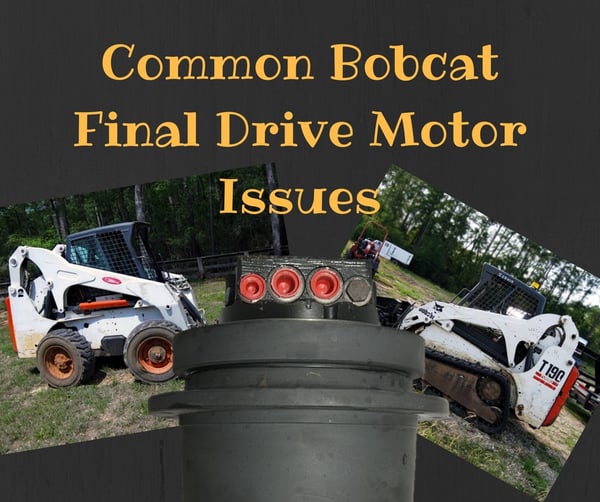
Here at Texas Final Drive, we troubleshoot, repair, and remanufacture final drives from Bobcat machines. Before replacing a motor, it helps to separate a drive problem from a machine-side problem. Bearing damage, case-drain restrictions, and charge-pressure problems belong on that checklist, but symptoms alone cannot tell you which one is responsible. (Texas Final Drive diagnosis guide)
For a starting point, use our Bobcat Final Drive Problems: A Symptom-by-Symptom Guide. Record what the machine does before deciding what needs repair.
Here are a few other related posts that you may find helpful ...
- Autopsy: Bobcat 331 Mini Excavator Final Drive
- Bobcat 325 Rotator Group Damage
- Reman Bobcat T190 Final Drives
- Bobcat 337 Final Drive Failures
Check Safely
Follow the operator's manual for shutdown, isolation, and accessible fluid checks. Leave hydraulic pressure and flow testing to a qualified technician using the service procedure, equipment, and limits for your machine. And never search for a hydraulic leak with your hand, and seek immediate medical care for a suspected injection injury. (HSE hydraulic safety guidance, HSE injection-injury guidance). Be sure to stop operating and arrange service for grinding, visible metal in drained oil, an active hydraulic leak, damaged housing, unexpected movement, or loss of travel control. Do not keep running the machine to reproduce the fault.
Main Bearing Failure
Low lubricant and seal leakage can contribute to bearing damage, and that damage can spread to other parts of the drive.
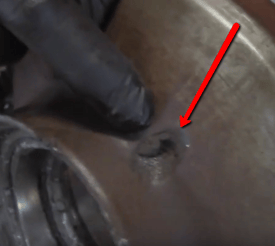 Bearings have a limited life, but there are ways to keep them from failing prematurely. Once of the most common causes of premature bearing failure in Bobcat final drive motors is failure to change or even check the bearing oil for the main hub. In the picture shown, you can see one of two drainage holes for hub bearing. They are often covered up with dirt and debris, and we suspect that some final drive owners may not be aware they are there.
The oil for the hub bearing needs to be checked and changed about every 500 hours. If the levels run low, the failed bearing can quickly take out the rest of the final drive motor. If the oil looks “glittery” when you change it out, that likely means you have a bearing that is already tearing up.
The usual steps that lead to main bearing failure start with a leak in the main seal, which allows the bearing lubricant to leak out. As the hub bearing oil begins to run low, the bearings begin to experience damage. The effects of the damage have a domino effect, and your entire final drive can be irreparably damaged. The picture you see below shows the aftermath of a main bearing failure.
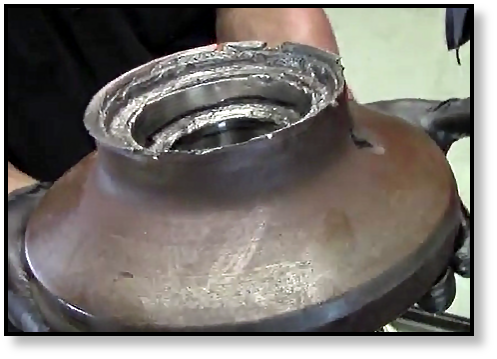
Find the correct lubrication instructions for your drive. If it has a separate hub-bearing oil compartment, follow the specified level-check method, lubricant, and service interval rather than applying one interval to every Bobcat. And keep in mind that ghlitter or metal in drained oil is reason to investigate internal wear, not proof of one failed bearing or an unrepairable motor. Stop operating and record which compartment was drained so the technician can assess the finding.
Case Drain Issues
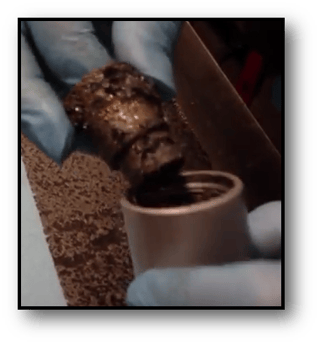 Another very common source of problems for Bobcat final drive motors involved clogged case drain filters. When the filter clogs up, hydraulic fluid backs up into the final drive motor. This results in high pressure.
The pressure continues to build as case drain flow is blocked by the clogged filter. The oil seal eventually fails, allowing hydraulic fluid and gear oil to mix.
The damage from a clogged case drain filter can be extensive as pressure continues to build. It is not uncommon to see rotator groups that look like they’ve been blown apart, bearings in pieces, and a cracked or missing cover plate.
This can be prevented by replacing the whenever you replace the other filters. A clean case drain filter will be bronze in color. If it is dark or dirty looking, it needs to be replaced. Cleaning a case drain filter isn’t recommended -- replace it if you have any doubts.
First establish whether your machine has a case-drain filter and which service instructions apply. Follow its replacement schedule; do not treat filter color as proof that the element is clear or due for service. Flow and pressure answer different questions. Excessive measured case-drain flow can point to internal wear, while a restriction concerns the return path and backpressure; neither finding alone identifies a particular failed seal.
We recommend that you have a technician use the approved setup and compare readings with model-specific limits under the specified conditions. Don't disconnect a line for an improvised bucket test or block the motor's case-drain outlet while it operates. And if you experience a final drive failure or a pump failure, it wouldn’t hurt to change out the case drain filter as a precaution.
Charge Pump Problems
Too many times machine owners replace a final drive assuming it is the source of the problem when the issue really is the charge pump. If your Bobcat machine has a weak charge pump, it can cause damage to your final drive if the brakes don’t completely release. Your motor may seem weak or your Bobcat machine may steer to one side. If the charge pump is not replaced, it will damage your final drive motor. You see, insufficient charge pressure can contribute to weak travel or incomplete brake release on applicable circuits, allowing brake drag to damage components.
That does not mean a weak machine automatically needs a pump. Have the technician follow the diagnostic sequence and identify why the pressure is low before replacing parts. On a shared-brake circuit, leakage on one side may affect brake release on the other. A technician should confirm the circuit arrangement and keep charge-pressure and brake-release measurements separate.
The Short Version
Conclusion
Bearing failures, case drain issues, and charge pump problems are some of the common issues that Bobcat final drive motors seem to have in common. The good news is that they can usually be prevented by regular maintenance.
Keep up with the service schedule, but do not assume maintenance prevents every failure. Record the symptoms, get the right measurements, and establish the cause before ordering a drive or pump.
And check out our Bobcat final drive diagnosis kit, which includes owner checks, technician worksheets, and a readings sheet. Call Texas Final Drive at 281-259-5267 if you need help discussing the next step.