
Your Bobcat is down, one final drive is toast, and now you've got three quotes in front of you: OEM from the dealer, a new motor from a parts supplier, and a remanufactured one for a lot less. They can't all be the same, so what are you actually paying for?
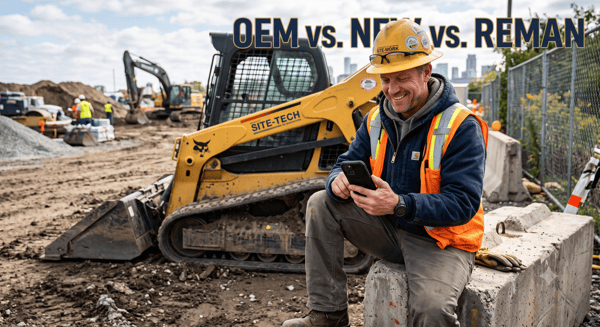
Every one of those three options can get your machine back to work. But they're not interchangeable when it comes to lead time, cost, and what's actually backing you up if something goes wrong. Here's what's really different, and how to pick the right one without overpaying or getting burned.
Here are a few other Shop Talk Blog posts you might find of interest:
- Finding the Right Final Drive for Your Skid Steer or Compact Track Loader
- Bobcat Final Drives: Leaking Seals and Crossrobbing
- Bobcat Final Drive Basics
What "OEM" Actually Means (and What It Costs You)
OEM means the part came from Bobcat's own supply chain, carrying the Bobcat part number and built to the exact factory spec for your machine. There's no guessing on fitment, and for a machine still under factory warranty, it's often the only option that keeps that warranty intact.
Here's the catch: final drive motors aren't a part your dealer keeps ten of on a shelf. They're a special-order item on most models, and you can be looking at days to weeks of downtime waiting on a backorder. You're also paying full dealer markup, which is typically the highest of the three options by a wide margin.
OEM makes the most sense when:
- The machine is still under Bobcat's factory warranty and you need to preserve it
- You're required to use OEM parts for a fleet compliance or resale reason
- Lead time isn't your biggest constraint
What "New" Really Means When It's Not OEM
A new final drive motor is exactly what it sounds like: freshly manufactured, zero hours, zero wear history. The difference from OEM is the badge, not the build quality, when it's sourced from a supplier who tests and documents every unit. It's built to meet or exceed the original OEM specification, just without the Bobcat part number and dealer price tag attached to it.
Because these units aren't tied to a single manufacturer's backorder queue, a supplier who stocks them can usually get one to you same-day or next-day instead of weeks out. At Texas Final Drive, our new final drive motors carry a 2-year, unlimited-hour warranty covering parts and labor, which is longer than what you'll typically get from an OEM dealer part.
New makes the most sense when:
- You want zero wear history and the longest warranty available
- The machine is out of factory warranty, so OEM sourcing isn't required
- You need it fast and can't afford a multi-week wait

What "Remanufactured" Really Means (It's Not a Used Part)
This is where the most confusion happens. A reman final drive motor is not a used motor with a fresh coat of paint. A proper remanufacturing process means a full teardown, cleaning, and inspection of every component, replacement of all wear items (bearings, seals, the rotary group), machining back to factory tolerances, and a final test bench run before it ever ships. Anything that doesn't meet spec gets replaced, not reused.
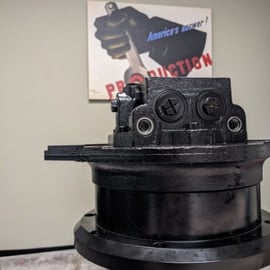
That process is also why reman costs less than new or OEM: you're paying for labor and select new components instead of manufacturing every part from raw stock. It's the same reason reman is common in the automotive world for transmissions and engines, and it's just as legitimate here when it's done right. Our reman final drives meet or exceed OEM spec and carry a 1-year, unlimited-hour warranty covering parts and labor.
Reman makes the most sense when:
- You want OEM-level performance at a lower price point
- The machine is older or you're running a cost-conscious rental or fleet operation
- You're comfortable with a slightly shorter warranty window in exchange for savings
Side-by-Side: OEM vs. New vs. Reman
| OEM (Dealer) | New (Non-OEM) | Remanufactured | |
|---|---|---|---|
| Quality | Factory spec, Bobcat-branded | Meets or exceeds OEM spec | Meets or exceeds OEM spec |
| Wear history | None | None | None on replaced wear components |
| Typical lead time | Days to weeks (special order) | Often same-day or next-day if in stock | Often same-day or next-day if in stock |
| Cost | Highest | Mid-range | Lowest |
| Warranty (Texas Final Drive) | Set by Bobcat/dealer | 2-year, unlimited hours, parts and labor | 1-year, unlimited hours, parts and labor |
| Best for | Machines still under factory warranty | Fastest turnaround with longest aftermarket warranty | Budget-conscious repairs, older equipment, fleets |
Quick Checklist: How to Decide
- Is the machine still under Bobcat's factory warranty? If yes, OEM protects that warranty.
- How many days can this machine sit before it's costing you real money?
- What's the age and resale plan for this machine — is it a long-term keeper or a shorter-hold fleet unit?
- Does your budget favor the lowest upfront cost, or the longest warranty coverage?
- Has the root cause of the failure been identified, so whichever drive you install doesn't fail again in six months? (If you haven't ruled out contamination or a weak charge pump, read this first.)
The Bottom Line
None of these three options is automatically "better." OEM protects a factory warranty. New gets you zero-hour performance with the longest aftermarket warranty and fast turnaround. Reman gets you the same tested, spec-verified performance at the lowest cost. The right call depends on your machine's warranty status, how fast you need it running, and your budget — not on which word sounds the most trustworthy on a website.
If you're not sure which fits your situation, give us a call. We'll help you figure out what actually happened to the old drive and which option makes sense for your machine, not just the one that's easiest to sell. Just contact us or give us a call at Texas Final Drive!