
To prepare a final drive core for return shipping, confirm you have the right unit, leave it assembled, drain the hydraulic fluid and gear oil, cap all ports, secure loose parts, photograph everything, include your paperwork, and package it to support the full weight of the drive. To learn, keep reading!
Here are a few other blog posts you might be interested in:
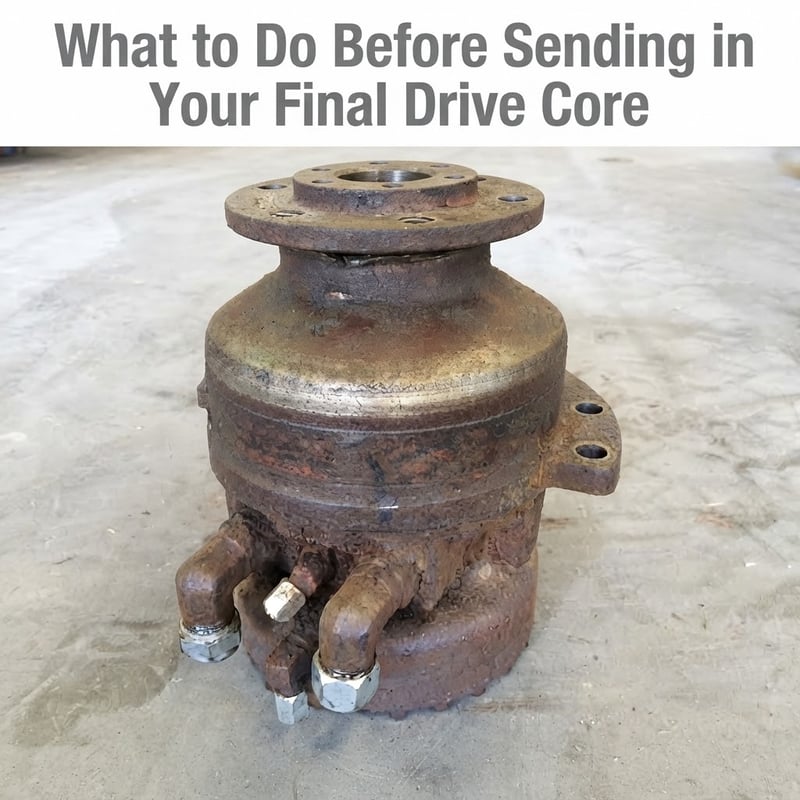
When you purchase a new or reman final drive, you have to remove the old one. The term core refers to the used final drive you’re replacing. If the housing, flange, and ports are still in good condition, then there’s a good chance the old final drive can be remanufactured. Even if they don't appear to be in good condition, snap a few pictures and send them to the experts. The core may still be salvageable! However, if you don’t package it properly, it can end up being damaged on the way to us.
But before you put that old final drive on a pallet and send it on its way, there are a few things you need to do. And that’s the topic of this Shop Talk Blog Post.
Watch: how to prep a final drive core for return shipping.
Step 1: Make Sure You Are Returning the Correct Final Drive
Nobody wants you to accidentally return the wrong final drive core. Always compare the core with the final drive that was removed from your machine. Check the manufacturer/model information and identification numbers when available. And if multiple drives or machines are being serviced, clearly identify which core belongs to which order. And if there’s an uncertainty about which unit should be sent in, contact Texas Final Drive.
Do not ship a core if you are unsure whether it belongs with your order. Call Texas Final Drive first.
Step 2: Do Not Disassemble the Core
We want you to keep the final drive complete for us to inspect and remanufacture. So leave the final drive assembled in one piece unless we specifically tell you otherwise. Don’t open the hydraulic motor or planetary gearbox just to investigate the failure, and don’t remove internal components. Keep in mind that disassembly can result in lost or damaged parts. An intact core also gives technicians a better opportunity to determine how the unit failed.
When it comes to the core, curiosity plus a toolbox can become an expensive combination.
Step 3: Drain Fluids
Next, you want to reduce the chances of your final drive leaking while it’s being transported. This includes both hydraulic fluid in the motor and gear oil in the planetary hub. Your final drive will likely be tilted or turned during handling, which means that any residual fluid inside can make its way out. This is also required for shipping any kind of heavy equipment if you want to avoid delays and hazmat fees.
Fluids should be drained into an appropriate container and then disposed of or recycled as appropriate. Never dump hydraulic fluid or gear oil onto the ground or into a drain.
Step 4: Cap or Plug the Hydraulic Ports
Final drives have multiple ports, and once the lines have been disconnected, you need to install appropriate caps or plugs and make sure they are secure. You can’t just rely on rags stuffed into the ports. And caps serve a dual purpose: they keep residual fluids inside while also keeping dirt, moisture, and debris out of the final drive core.
Step 5: Inspect the Core for Loose or Damaged Components
Now, identify anything that could fall off or cause trouble during shipping. This could be loose fittings, loose plugs, broken mounting components, sharp broken edges, cracked housings, or any part that could separate during transit. Secure what you can and cover any sharp edges. You can place any loose parts in a heavy-duty garbage bag.
Step 6: Make Sure You Know What Needs to Be Returned
Next, we encourage you to check what parts need to be returned with the core. We don’t want you to have to return anything that isn’t necessary. For example, you don’t need to send us the sprocket. We also recommend that you hang on to the fittings so they don’t get misplaced during the teardown and inspection process later on.
You don’t have to assume that every attached component should be returned. If you’re in doubt, give us a call for clarification.
Step 7: Photograph the Core Before Packaging It
We highly recommend that you take photos of the following before packing up your final drive core:
- The entire final drive
- Identification plate/tag
- Part or serial numbers
- Hydraulic ports
- Mounting surfaces
- Cracks or major external damage
- Any unusual damage
- The unit after it has been secured for shipping
These photos can be really useful if questions arise about identification, condition, or shipping damage. And always document the condition of your final drive before it ships for insurance purposes.
Step 8: Gather Your Core Return Information
Make sure we can connect the arriving core to the correct customer and order. So, before packaging, you should locate any required:
- Order number
- Customer information
- Core-return paperwork
- RMA or return authorization number, if applicable
- Shipping label
- Other documentation supplied by Texas Final Drive
This documentation should be placed inside with the final drive core.
Step 9: Protect Against Residual Fluid Leaks
Even after you’ve drained it, some hydraulic fluid or gear oil may remain trapped within the core. Drained doesn’t mean completely dry. We recommend that you …
- Make sure ports are securely capped.
- Use absorbent material where appropriate.
- Check the exterior of the final drive for active leaks before sealing the package.
Step 10: Choose Packaging That Can Handle the Weight
You can prevent one of the biggest potential shipping problems by choosing packaging that can handle the weight of your final drive. Final drives are extremely heavy relative to their size. The drives we sell can weigh anywhere from 70 lbs for a Bobcat S250 single-speed final drive to 1,345 lbs for a Doosan DX480 final drive.
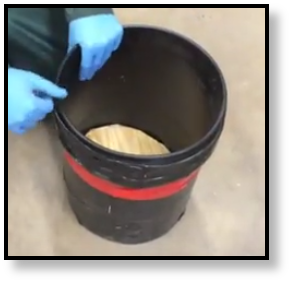 If it’s a small final drive that weighs less than 150 pounds, it can be shipped to us in a bucket. Get at least a 5-gallon industrial-strength bucket and remove the wire handle. Cut a ¾” plywood circle to fit in the bottom of the bucket. Place your final drive on top of it. Add some packing paper or bubble wrap, then place another plywood circle on top of the drive. Duct tape the lid in place, and it's ready to go.
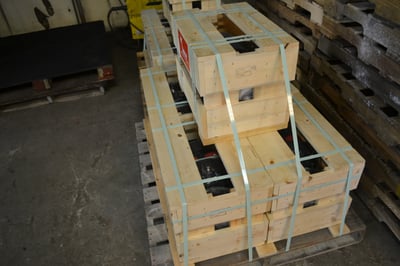 For a final drive that weighs more than 150 pounds, start with a strong cardboard box big enough for it to fit inside. Put the final drive inside, then fill the remaining area with expanding foam. You’ll probably need at least two cans and possibly more, depending on how big the box is. Seal the box up and reinforce the outside with heavy-duty straps. Now it’s ready to ship.
There are other options, such as pallet shipping or building your own DIY crate. Contact us if you need advice.
| Core Weight | Packaging Method | Key Requirements and Instructions |
|---|---|---|
| Under 150 lbs | 5-gallon industrial bucket | ¾" plywood discs top and bottom, handle removed, taped lid |
| Over 150 lbs | Heavy cardboard box | 2+ cans of expanding foam, heavy-duty straps |
| Very heavy / oversize | Pallet or DIY crate | Blocking, bracing, rated straps — call for advice |
Your packaging needs to support the weight of the final drive throughout the entire shipping process, not just while it is sitting on your shop floor.
Step 11: Secure the Final Drive So It Cannot Move
When packing your final drive, prevent it from becoming a heavy wrecking ball inside its packaging. Here are some tips on how to secure it:
- Center the drive on the pallet or inside the container whenever possible
- If it’s palletized, check that the final drive cannot shift beyond the edges of the pallet
- Use appropriate blocking or bracing
- Secure it using properly rated straps or other restraints
- Protect protruding fittings and ports
- Make sure the unit cannot roll, slide, tip, or shift
If it’s shipping enclosed in a box or crate, you can fill up the open area with expanding foam to aid in securing the core. Remember: you can’t rely on plastic stretch wrap alone to hold the drive in place.
Step 12: Double-Check the Shipping Information
We know you want to avoid delays and misdirected cores. So, before shipping, verify the return address supplied by Texas Final Drive and verify the shipping label. Make sure the order/core information is included. Then confirm any carrier-specific instructions and keep your tracking information.
Step 13: Take a Final Package Photo
Before the carrier takes your final drive, we really recommend that you photograph the package. When doing so, make sure the shipping label is visible in at least one photo. Save the tracking number and keep your return documentation until the core has been received and processed. This step creates a simple record of what was shipped, how it was packaged, and when it left.
Quick Checklist: Before You Ship Your Final Drive Core
Here’s a checklist for you:
□ Correct final drive identified
□ Core left assembled
□ Fluids handled according to return instructions
□ Hydraulic ports capped or plugged
□ Loose components secured
□ Required components included
□ Identification numbers photographed
□ Damage documented
□ Return paperwork included
□ Final drive properly packaged
□ Drive secured against movement
□ Shipping information verified
□ Final package photographed
□ Tracking number saved
What Happens to Your Final Drive Core After It Arrives?
Once we receive your core, it will be …
- Received and identified
- Inspected
- Disassembled
- Cleaned
- Evaluated for damage and wear
- Rebuilt using serviceable and replacement components as appropriate
- Reassembled
- Tested
This is part of our 10-Step Reman Process, if you're interested in knowing what happens behind the curtain.
Conclusion: A Little Preparation Goes a Long Way
Keep it complete. Keep it contained. Keep it secure. Prepping your core properly makes it safer to ship and helps prevent damage, leaks, lost components, and delays in processing.
If you’re ever uncertain about what needs to be included or how a particular core should be returned, we encourage you to contact Texas Final Drive at (877) 781-9820 before shipping it.

Frequently Asked Questions About Final Drive Cores
What happens if my core is rejected?
Texas Final Drive reserves the right to adjust the core return credit for signs of negligence, abuse, or damage, at our full discretion. If you're worried your core won't qualify for full credit, you can send it in for inspection first if you have concerns about whether it will receive full credit.
Do I have to drain the hydraulic fluid before shipping a core?
Yes, you do. Also make sure the hydraulic ports are securely plugged so any leftover fluid doesn't leak out during transit.
Do I need to send the sprocket back with the core?
No. There's no need to ship the sprocket with your final drive, and they recommend hanging onto the fittings too.
Can I ship a final drive core in a 5-gallon bucket?
Yes, but only for smaller units. If the final drive weighs less than 150 pounds, it can be shipped in an industrial-strength 5-gallon bucket with the wire handle removed, using plywood circles top and bottom with packing paper or bubble wrap in between, sealed with duct tape.
Does a cracked housing make my core worthless?
Not necessarily. As long as the housing, flange, and ports are still in good condition, there's a chance the core can be remanufactured — and even if it doesn't look great, we encourage you to send pictures because it may still be salvageable. That said, if the housing is severely damaged, the core may be rejected by many buyers since rebuilding without a solid housing is difficult and expensive. So a cracked housing hurts value and may disqualify it in some cases, but it's not automatically worthless.
What if the core is damaged in transit?
This can reduce or void your core credit. Our core policy explicitly lists damage during shipping and improper packaging as examples of core negligence/abuse that can lead to a reduced credit, at our discretion. That's exactly why our shipping guide emphasizes secure port plugs, bagging loose parts, and using bubble wrap/foam padding rather than a bare wooden crate.