
Every rental return is a chance to catch a final drive problem while it's still small. Once the machine goes back out, you're relying on the next renter, who doesn't know the machine's history, to notice a slow leak or a new noise. Usually they don't, until the machine stops on their job.
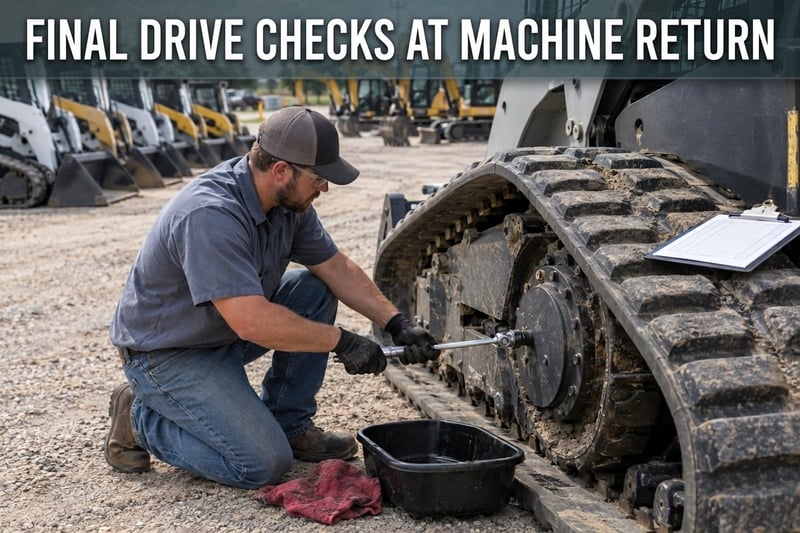
A short final drive check at check-in costs a few minutes of a technician's time. Skipping it can mean an emergency service call, a machine off rent, and an unhappy customer. Here's a practical check-in routine for compact track loaders, skid steers, and mini excavators from Bobcat, Kubota, John Deere, and other brands.
Why Final Drives Deserve Their Own Line on the Check-In Sheet
The final drive takes everything a renter does. That includes overloading, counter-rotating on concrete, running with packed tracks, and operating in mud and standing water. Renters don't own the machine, so they rarely report early warning signs.
In our experience, most premature final drive failures trace back to a few maintenance items: a clogged case drain filter, low gear oil, or gear oil that wasn't changed often enough. We cover this in Maintaining a Bobcat Final Drive. All three can be caught on a regular schedule, and a rental yard's check-in process is the natural place for that schedule.
The 10-Minute Final Drive Check-In
1. Clean before you look
Pressure-wash or scrape the final drive area first. Packed mud hides leaks, and it gets into the gear housing when you open the fill plugs -- and an excessive build up can even force the face seals apart. Also clean around the plugs before you open anything.
Look closely at the hub, the motor housing, the hose fittings, and the area behind the sprocket for any signs of a leak.
- Gear oil at the hub or between the rotating and stationary halves can mean a failing floating face seal (duo-cone seal).
- Hydraulic fluid at the motor or fittings can point to a loose fitting, a damaged hose, or a seal on the motor side.
- Fresh, wet residue that's collecting dirt is easy to spot after a wash.
Write down which side and where. That detail helps your shop, or ours, narrow down the cause later.
3. Check the gear oil level
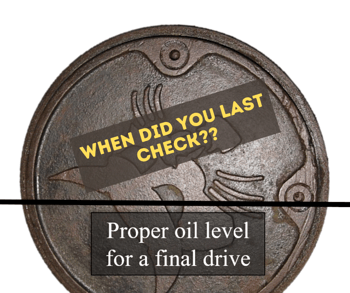 Follow the procedure in your machine's operator's manual. On many compact equipment final drives, it works like this:
- Rotate the drive so one plug is at 12 o'clock and the other is at 3 or 9 o'clock.
- Remove both plugs.
- Oil should be level with the lower opening.
If you keep topping off the same drive, there's probably a leaking seal. Fix the leak instead of continuing to add oil. Texas Final Drive's general guidance is to check gear oil about every 100 working hours. Rental units run on unpredictable schedules, so checking at every return is an easy way to stay ahead.
4. Look at the oil, not just the level
When you open a plug, look what comes out.
- Sparkly or glittery oil means metal particles from gear or bearing wear. Schedule service as soon as possible.
- Milky or cloudy oil suggests water got in, often through a seal.
- Too much oil, or oil that looks and smells like hydraulic fluid can mean hydraulic oil is leaking past the motor shaft seal into the gear housing. Don't ignore it.
- A burnt smell or very dark oil points to overheating or oil that's overdue for a change.
5. Listen and drive
Run the machine in a clear area. Travel forward and reverse, in low and high speed if it's a two-speed machine, and turn in both directions. Listen for grinding, clunking, or a high-pitched whine. Watch for:
- Tracking or pulling to one side.
- Jerky or surging travel.
- A side that's slow to engage.
- Trouble shifting into high speed.
These could all be indicators of a problem with the final drive motors and should play a role in any troubleshooting that takes place.
6. Check track tension and the undercarriage
An overtightened track puts extra load on final drive motor bearings, while a loose one can throw a track or allow debris to pack in. Set tension to the OEM specification. Also clear any debris packed around the sprocket and drive.
7. Record hours and service dates
Write down the hour meter reading, the last gear oil change, and the last case drain filter change. Gear oil should be changed at least once a year, or at the OEM interval. Case drain filters, where fitted, should be replaced when you change the other hydraulic filters or according to OEM guidelines.
Turn It Into a Check-In Routine
| Check | What You're Looking For | Action If Found |
|---|---|---|
| Visual leak check | Gear oil or hydraulic fluid at hub, motor, fittings | Tag unitInspect seals and fittings |
| Gear oil level | Below fill opening | Top off; if recurring, schedule seal repair |
| Gear oil condition | Glitter, milky, too much oil, burnt | Hold unitSchedule final drive evaluation |
| Travel test | Pulling, noise, slow side, two-speed issues | Hold unitDiagnose before re-renting |
| Track tension | Outside OEM spec | Adjust to spec |
| Records | Hours since last oil or case drain filter change | Service if due |
A unit that fails any "hold unit" check shouldn't go back out until someone has looked at it. That decision might cost you a rental day now. It's still cheaper than a breakdown on a customer's site.

Check-in records protect you too
Consistent check-in records also help with damage disputes. If a machine goes out with clean, full gear oil and comes back leaking with glitter in the oil, your records support the conversation with the renter. Photos, notes, and hour readings make the record much stronger.
Safety Before You Start
A final drive check puts your hands near hot oil, heavy tracks, and a machine that can move. A few habits keep the check quick and safe:
- Shut it down and block it. Park on level ground, lower the attachment, remove the key, and never work under arms or a bucket held up by hydraulics alone. Use rated stands or the lift arm support.
- Keep clear when rotating the tracks. Hands, feet, and tools stay away from sprockets and undercarriage, and the operator needs to see everyone nearby.
- Open plugs slowly. A warm drive can hold pressure and hot oil. Let it cool, loosen the plug gradually, and stand to the side.
- Treat leaks as pressurized. Wear safety glasses and gloves, and never check for a hydraulic leak with your hand.
Catch the used oil in a pan, and follow your local rules for disposal. When in doubt, follow the operator's manual and your shop's safety policy.

Talk to a Final Drive Expert
If check-in turns up something you're not sure about, call before you pull the motor. Our staff and technicians are glad to answer questions before you ever need our services, from which gear oil we recommend to whether a problem sounds like your final drive. Texas Final Drive works with rental fleets running Bobcat, Kubota, John Deere, and other compact equipment.
Call a final drive expert: 281-259-5267
You can also contact Texas Final Drive or request a quote.